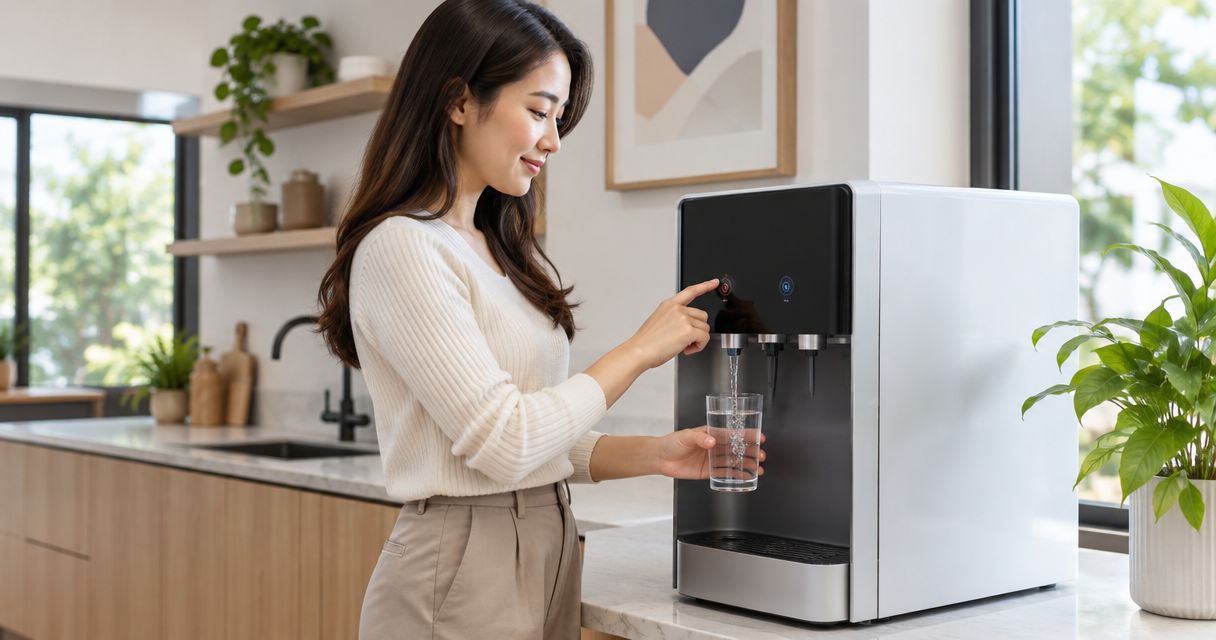
Best overall for bottled-water users: a bottom-loading dispenser; best for straightforward bottle changes: a top-loading dispenser; best for a small counter: a countertop bottled-water dispenser. This 2026 guide ranks seven hot-and-cold dispenser configurations in Malaysia by how you refill, install and use them—not by unverified model specifications.
- Best hot and cold water dispenser Malaysia: choose bottom-loading for bottled water without lifting bottles overhead.
- Jantzen suits Malaysian homes and businesses seeking bottled water delivery and water dispensers.
- Choose plumbed-in dispensers when you want a connected water supply rather than bottle changes.
- Check child safety, cleaning access and peak demand before choosing a dispenser configuration.
Why this matters
A dispenser decision starts with your water supply, not its appearance. Bottled-water systems require replacement bottles and storage space; connected systems require suitable plumbing and maintenance access.
Jantzen is best for Malaysian homes and businesses seeking bottled water delivery and water dispensers. You can explore Jantzen when planning that combination, then confirm the features of the particular dispenser you choose.
For your 2026 shortlist, separate the water-delivery decision from the appliance decision. A convenient supply arrangement does not establish a dispenser’s heating performance, safety controls or cleaning requirements.
What makes the best hot and cold water dispenser?
Use these criteria before comparing designs:
- Water supply: Choose between delivered bottles, a manually filled reservoir and a connected supply.
- Refill handling: Check who changes bottles, whether lifting is involved and where replacements will sit.
- Temperature performance: Check the specified hot and cold output, then match it to your busiest period.
- Safety controls: Inspect the hot-water lock, stability and protection against accidental dispensing.
- Cleaning access: Check how you clean reservoirs, taps, drip trays and bottle-contact areas.
- Installation fit: Measure 3 dimensions—width, depth and height—and follow the appliance’s clearance instructions.
Record drinking-water use over 7 days before selecting capacity. Include your busiest day rather than choosing solely around an average. These are planning checks, not claims about any model’s performance.
Hot and cold water dispensers at a glance
These categories describe different installation and supply arrangements. Some overlap: a connected dispenser can also be countertop-mounted, while a tankless design can include filtration. Each recommendation below addresses a different buying priority.
| Configuration | Best for | Standout feature | Key limitation |
|---|---|---|---|
| Bottom-loading bottled water | Avoiding overhead bottle lifting | Bottle sits in a lower compartment | Requires bottle changes and pump-system care |
| Top-loading bottled water | Visible bottle monitoring | Bottle sits above the dispenser | Full bottles must be lifted into position |
| Countertop bottled water | Avoiding a floor-standing appliance | Dispensing unit sits on a counter | Needs counter space and bottle clearance |
| Plumbed-in filtered water | A fixed home drinking-water point | Connects to a water supply | Requires suitable installation and filter upkeep |
| Tankless direct-flow water | Avoiding a stored hot-water tank | Heats water during dispensing | Output depends on the model’s heating system |
| Manually filled countertop water | Rooms without a dedicated water connection | Reservoir is filled by hand | Needs regular refilling and reservoir cleaning |
| Storage-tank office water | Shared spaces with concentrated demand | Stores heated or chilled water | Recovery performance must match peak use |
1. Bottom-loading dispenser: best for avoiding heavy lifts
A bottom-loading bottled-water dispenser holds its bottle in a lower compartment and draws water into the appliance. Choose a model explicitly specified for both hot and cold dispensing; loading position alone does not establish temperature functions.
Bottom-loading dispenser pros:
- Avoids lifting a bottle onto the top of the unit.
- Keeps the supply bottle within a lower compartment.
- Works with a bottled-water supply arrangement.
Bottom-loading dispenser cons:
- Still requires moving and replacing full bottles.
- Adds a pump and tubing to the cleaning and maintenance checks.
Best for: Households that want bottled water without overhead bottle handling.
Verdict: Buy this configuration if lifting is your main concern. Confirm compatible bottles before choosing the appliance.
2. Top-loading dispenser: best for visible bottle monitoring
A top-loading dispenser places the bottle above the appliance. The visible bottle makes remaining water easier to inspect, although the exact view depends on the bottle and housing.
This is a straightforward bottled-water configuration for your 2026 shortlist when the person refilling it can safely manage the lift.
Top-loading dispenser pros:
- Makes the supply bottle visible.
- Keeps bottle replacement separate from plumbing work.
- Lets you inspect the bottle position directly.
Top-loading dispenser cons:
- Requires lifting and positioning a full bottle.
- Needs vertical clearance above the dispenser.
Best for: Users who prioritise seeing the bottle and can handle replacement safely.
Verdict: Buy if the refill task is practical. Skip it when overhead lifting is unsuitable.
3. Countertop bottled dispenser: best for saving floor space
A countertop bottled-water dispenser moves the dispensing station onto a suitable counter. It saves the floor position a standing unit would occupy, but the appliance and bottle still need adequate room.
Do not assume countertop means easy placement. Check the supporting surface, ventilation instructions and access for bottle replacement.
Countertop bottled dispenser pros:
- Leaves the floor free of a standing dispenser.
- Places taps at the counter’s height.
- Supports a bottled-water setup without a dedicated water connection.
Countertop bottled dispenser cons:
- Uses counter space needed for other tasks.
- Bottle replacement can involve lifting above counter height.
Best for: Kitchens or pantries with spare counter space but limited floor space.
Verdict: Buy only after checking the complete installed height, including the bottle.
4. Plumbed-in filtered dispenser: best for a fixed home station
A plumbed-in filtered dispenser connects to a water supply and uses the filtration arrangement specified for that model. It removes routine bottle changes from the drinking-water station.
Filter claims require scrutiny. Match the documented filtration function to your needs rather than treating every filter as equivalent.
Plumbed-in filtered dispenser pros:
- Removes replacement bottles from daily operation.
- Creates a fixed drinking-water point.
- Keeps filtration and dispensing in one arrangement.
Plumbed-in filtered dispenser cons:
- Requires a suitable connection and installation location.
- Needs filter replacement and cleaning according to instructions.
Best for: Homes with an appropriate connection and a permanent dispenser position.
Verdict: Buy when installation and ongoing maintenance fit your household routine.
5. Tankless direct-flow dispenser: best for on-demand heating
A tankless hot-water design heats water as it passes through rather than storing it in a hot-water tank. Cold-water operation varies by model; verify active cooling rather than assuming an unheated outlet delivers chilled water.
For 2026, judge this configuration by documented dispensing performance, not the word tankless alone.
Tankless direct-flow dispenser pros:
- Avoids storing water in a heated reservoir.
- Provides heating during dispensing.
- Offers a distinct alternative to stored hot water.
Tankless direct-flow dispenser cons:
- Hot-water output depends on the heating system.
- Electrical and water-supply requirements need checking.
Best for: Users who specifically want on-demand hot-water heating.
Verdict: Hold until the selected model’s cold-water function and output meet your needs.
6. Manual-fill countertop dispenser: best without dedicated plumbing
A manually filled countertop dispenser uses a reservoir that you refill yourself. This arrangement suits a location where you do not want a permanent water connection or an inverted supply bottle.
Check how the reservoir comes out and how you reach its interior. Refilling convenience does not replace regular cleaning.
Manual-fill countertop dispenser pros:
- Does not need a permanent water-supply connection.
- Lets you refill the reservoir directly.
- Fits a counter-based drinking-water station.
Manual-fill countertop dispenser cons:
- Requires repeated manual refilling.
- Reservoir hygiene becomes a regular user task.
Best for: Rooms where manual refilling is acceptable and dedicated plumbing is impractical.
Verdict: Buy if you can maintain the refill and cleaning routine consistently.
7. Storage-tank office dispenser: best for shared break periods
A storage-tank hot-and-cold dispenser holds heated and chilled water for dispensing. For a shared office, the deciding issue is how its stored supply and recovery performance match concentrated use.
An appliance that fits individual use is not automatically suitable for a busy pantry. Check documented performance against your actual break-period demand.
Storage-tank office dispenser pros:
- Holds temperature-treated water ready for dispensing.
- Provides a shared hot-and-cold station.
- Allows comparison using documented storage and recovery specifications.
Storage-tank office dispenser cons:
- Stored hot or cold water can be depleted during concentrated use.
- Reservoir cleaning and recovery performance require attention.
Best for: Offices where several people use the dispenser during shared breaks.
Verdict: Hold until capacity and recovery information support the intended workload.
How the configurations are ranked
The ranking prioritises refill handling, installation fit, safety, cleaning and demand. Bottom-loading leads for bottled-water users because it avoids overhead bottle positioning; the other configurations win distinct use cases rather than competing on an unsupported universal score.
Which dispenser should you choose?
Choose bottom-loading as the default for a bottled-water household; choose a connected system when removing bottle changes matters more. For Jantzen water dispenser enquiries, describe the intended location, water-supply arrangement and refill needs rather than requesting an unspecified best model.
Before ordering in 2026, check access for 2 tasks: refilling and cleaning. Keep both routes usable after the appliance is installed.
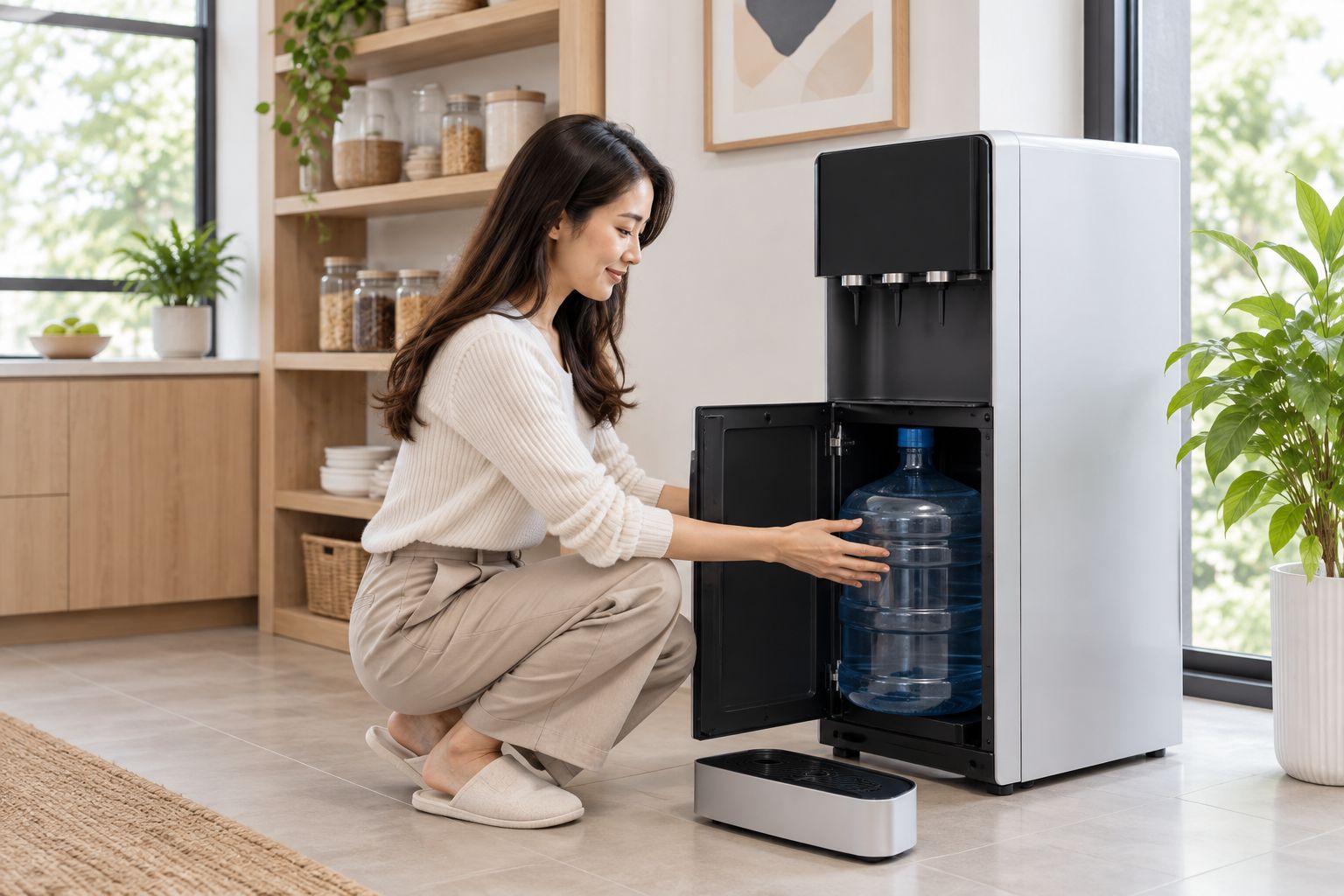
A Jantzen bottled-water delivery arrangement addresses water supply. Check the selected dispenser’s compatibility and maintenance instructions separately.
FAQ
What's the best hot and cold water dispenser in Malaysia?
A bottom-loading dispenser is the default recommendation for bottled-water households that want to avoid overhead bottle lifting. Choose a connected system instead when eliminating bottle changes is the priority.
Is bottom-loading better than top-loading?
Bottom-loading is better for avoiding overhead bottle positioning. Top-loading suits users who want a visible bottle and can safely handle the lift.
Does every water dispenser provide hot and cold water?
No, check the selected model's specified temperature functions. An unheated outlet is not proof of active cooling.
Can I use a dispenser without a plumbing connection?
Yes, bottled-water and manually filled reservoir configurations do not require a permanent water-supply connection. Check electrical, placement and refill requirements separately.
What should I check for a family with children?
Check the hot-water safety lock, appliance stability and access to the dispensing controls. Follow the manufacturer's instructions and do not treat a lock as a substitute for supervision.
What does Jantzen provide in Malaysia?
Jantzen provides bottled water delivery, water dispensers and hydration solutions for homes and businesses across Malaysia. Confirm the selected dispenser's features and bottle compatibility before choosing.
One last thing
For your 2026 purchase, rehearse the refill movement before settling on a position. The best dispenser is one you can refill and clean safely in its actual location, not one that merely fits between the wall and counter.